Borrow or Make? Choosing a First Tool for a Paper Hobby
Choose whether to borrow or make a first paper hobby tool by matching the option to how often you’ll use it and the work your project needs.
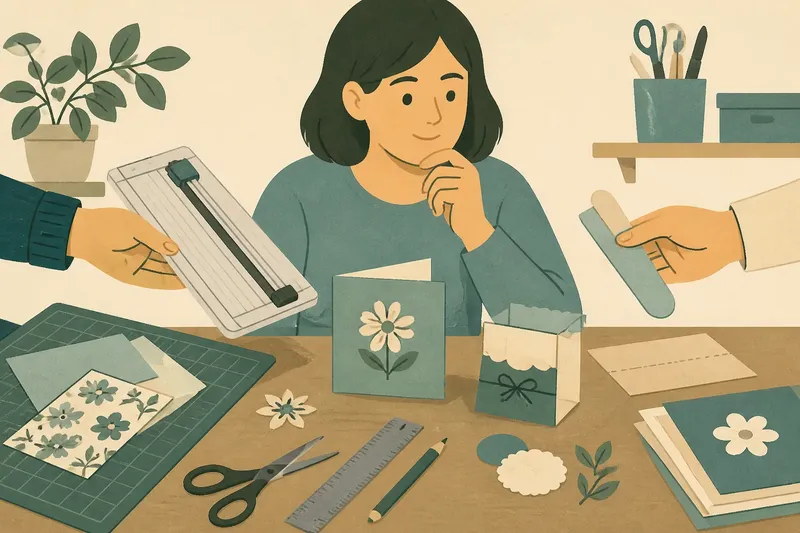
You have a paper project in mind, but the tool it calls for isn’t in your drawer. For a first paper hobby tool, borrowing may suit a one-off try, while making a substitute can work when the task is simple and you expect to repeat it.
The useful question isn’t which option is always cheaper or better. It’s what the activity actually asks the tool to do, how often you’ll do it, and whether a homemade version can do that job comfortably.
What does the project actually require?
Start by translating the project’s tool list into actions. “Scoring board,” for instance, may mean making a straight crease in a greeting card. “Paper trimmer” may mean cutting a clean edge on a few sheets. The name of a tool can make a task sound more specialized than it is.
Look at the material, the finish, and the number of repeated actions. Does the paper need a crisp fold, a narrow slit, a circle, or a decorative edge? Will you work on one sheet or a small stack? A substitute that works for a single, forgiving cut may frustrate you when a project needs many matching pieces.
Separate the essential result from the preferred method. A paper flower may require rounded petals, but the pattern might be traced and cut by hand rather than produced with a punch. On the other hand, a project calling for evenly spaced holes may depend on a punch that makes consistent openings.
Write down the job in plain language before deciding: “make a straight fold,” “cut a repeated shape,” or “pierce the same spot on several layers.” That description gives you a fair basis for comparing borrowing and making.
When does borrowing make more sense?
Borrow when you want to try an activity before committing to a tool, or when the tool’s precision matters more than owning it. A neighbor’s paper trimmer can help you find out whether you enjoy assembling a small booklet without purchasing equipment for a single afternoon.
It can also be the practical choice when the tool is awkward to imitate. A corner rounder punch, for example, makes matching corners neatly. Scissors can round them too, but the result may vary from piece to piece. If uniformity is central to your project, a borrowed punch can tell you whether that finish is worth pursuing.
Borrowing has its own small costs in time and coordination. You may need to collect and return the tool, work within someone else’s schedule, or avoid using it on materials that could damage it. Ask what the owner is comfortable with, and return the tool clean and in the same condition.
A local library, community art room, or hobby group may have shared equipment. Check what is available and whether you need to reserve it. If asking someone you know, be specific about the task and when you’ll bring the tool back.
When is a homemade substitute enough?
Make a substitute when the job is basic, the material is forgiving, and the result does not depend on machine-like consistency. For a single straight crease, the back of a butter knife can act as a blunt creasing tool against a ruler. Use light pressure on scrap paper first; the aim is a fold, not a cut.
For tracing shapes, a scrap of thin card can become a reusable template. Draw the shape, cut it out with scissors, and trace around it with a pencil. That approach is useful for repeated simple outlines, though hand-cut edges may not match the precision of a manufactured punch.
A homemade substitute should be comfortable and controllable. Avoid improvised tools with sharp, unstable, or slippery parts, and don’t force a material through an object that wasn’t made for that use. For a clean slit or detailed cut, suitable craft scissors or a proper cutting tool are a better choice than a makeshift blade.
Imagine you want to make one folded paper sleeve for a gift. You could borrow a scoring board, or test a blunt creasing tool and ruler on spare paper; if the fold is crisp enough for the sleeve, you can finish without arranging a loan. If the paper buckles or the crease wanders, that visible result tells you the project needs a more dependable tool.
How often will you use the tool?
Expected use is the hinge between borrowing and making. If you’re curious about a hobby but unsure you’ll return to it, borrowing lets you try the actual tool without adding an item to your home. If the same task is likely to come up across several projects, a simple homemade substitute may be convenient, provided it gives you the finish you want.
Think about the next few occasions you can name, rather than an imagined future version of yourself with an elaborate craft routine. Will you make another card soon? Do you already have a stack of paper pieces waiting to be trimmed? A specific project on the horizon is a stronger reason to keep a tool than a vague feeling that it might come in handy.
There is also a middle option: borrow first, then decide. Using the proper tool can help you learn what the task demands. You may discover that an ordinary ruler and scissors are enough, or that the tool’s even cuts make a real difference to work you plan to repeat.
If you do decide to make a substitute, keep it only if it earns a place through actual use. Store a homemade template with the project materials it serves, or recycle it when the project is finished. That keeps a temporary solution from becoming another forgotten supply.
What should you compare before deciding?
Use these questions to make the choice for the project in front of you:
- How many times will I do this task? For one brief use, borrowing or a simple substitute may be enough; repeated work makes convenience more relevant.
- How precise does the result need to be? A casual fold allows more flexibility than matching shapes or evenly spaced marks.
- What material will I use? Thin paper behaves differently from thick card, so try a substitute on an offcut before using it on the finished piece.
- Can I borrow the tool without creating a hassle? Consider pickup, return, scheduling, and the owner’s preferences.
- Can I make a safe, comfortable substitute from things I already have? If the answer depends on awkward pressure or a sharp improvised edge, choose a suitable tool instead.
- Will owning it solve a recurring problem? Look for a specific task you expect to repeat, not a general hope that the tool will inspire a new habit.
The answers don’t need to point in the same direction. You might borrow a punch for a neat set of invitations and still make a card template for a one-off project. The decision belongs to the task, not to a rule that every beginner must buy tools or improvise everything.
Which first-tool questions come up most often?
Can I use a kitchen knife to score paper?
Choose a blunt creasing tool, such as the back of a butter knife, rather than a sharp edge. Work gently on scrap paper with a ruler as a guide, and stop if the paper tears or the tool slips.
Is borrowing a craft tool rude?
Not if you ask clearly, agree on a return time, and follow the owner’s limits. If the tool is delicate or the project involves messy materials, ask before using it or look for a shared community resource.
How can I tell if a homemade substitute is good enough?
Try it on a spare piece of the same paper and inspect the result against the project’s needs. If the fold, cut, or shape is too uneven to use comfortably, borrow a suitable tool or choose a simpler design.
Should I buy a tool after borrowing one?
Consider buying only when you can name a recurring task the tool makes easier and you expect to use it again. If you’re still unsure about the hobby, borrow another time or use a basic substitute where it works.
What’s a sensible first choice?
For a paper hobby’s first tool, match the method to both the task and your likely use. Borrow equipment when the finish depends on precision or you want to try a tool before deciding it belongs in your routine. Make a straightforward substitute when the job is forgiving and a small trial shows it works.
Keep the project modest enough to learn from the result. A test fold on scrap, a traced shape, or one borrowed afternoon can show what you need more clearly than a drawer full of supplies. Once you know which action you’ll repeat, choosing the right tool becomes a smaller decision.