The Hobby Collection Trap: Why Supplies Do Not Make a Practice
The hobby collection trap turns shopping into a stand-in for making. Build a sustainable practice by choosing one activity that fits your day and space.
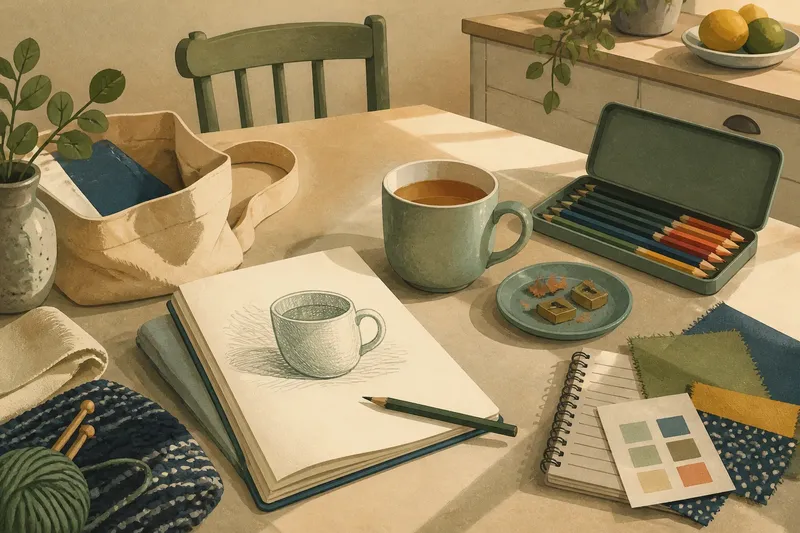
You clear a corner of the kitchen table, set out a new sketchbook, and then spend the evening browsing for better pencils. The hobby collection trap is easy to recognize in moments like this: preparing for an activity starts to take the place of doing it.
Buying supplies can be enjoyable, and a new interest does not need to prove itself right away. But if you want a hobby to become part of your ordinary life, the useful question is not what else to buy. It is what kind of session you can realistically return to, and what—if anything—would make that session easier.
Why does collecting feel more certain than practicing?
Shopping has tidy decisions built into it: choose a color, compare a notebook, find a box. The activity itself can be less clear. You may not know whether you enjoy the repetitive parts, how much space it needs, or whether you want to learn the techniques involved.
Supplies also make imagined projects feel close at hand. A basket of yarn might suggest scarves, blankets, and gifts. Yet those possibilities do not answer the practical question of whether you enjoy following a pattern or repeating a stitch. A small, specific session can tell you more than a shelf full of options.
That does not mean every hobby should stay minimal. It means materials are most useful when they serve an activity you actually want to do, rather than carrying the whole burden of making you feel ready.
Which kind of starting point fits you?
If you own supplies but rarely begin: Pick one simple action using a material already within reach. For example, arrange a few scraps of fabric into a small color pattern, then put them away. If starting feels easy, keep that activity available; if setup still feels like a barrier, choose something with less preparation.
If you are curious but have not bought anything: Look for an ordinary, suitable material or a borrowed option before choosing specialized supplies. If a pencil and spare paper let you try simple lettering, begin there; if the activity depends on a particular tool, check whether borrowing or sharing one is practical before buying.
If you practice but keep meeting the same obstacle: Name the obstacle before shopping. If loose pages are repeatedly getting bent, a folder may solve that problem; if you simply cannot decide what to draw, a new notebook probably will not choose a subject for you. Address the recurring friction, not the vague feeling that you need more.
If several interests are competing for your attention: Choose one activity to return to for a while, while leaving the others available for later. If focusing on one makes it easier to begin, keep that arrangement; if you miss another activity, rotate deliberately instead of buying supplies for every interest at once.
How can you shape a hobby session around your day?
Start with an existing pause: a quiet moment after lunch, the wait before dinner, or time at the end of the evening. Choose an activity that can fit that opening and does not require a large setup or a difficult cleanup.
Give the session a visible starting action. “Get better at drawing” is hard to begin; “sketch the mug beside the sink” gives your hand somewhere to go. “Learn to knit” is broad; “repeat one stitch on a small piece” is easier to pick up and put down.
Imagine you have a tin of colored pencils and a pocket notebook, but no drawing routine. You decide to sketch one object from the kitchen whenever you sit down for tea. After a few sessions, you notice that choosing an object is easy but the notebook’s narrow pages feel cramped. That points to a specific next decision: keep using the notebook if the constraint is enjoyable, or try a larger sheet if it interrupts the activity. Either way, the choice comes from the sessions, not from guessing in a store.
Keep the activity small enough that stopping is comfortable. A longer session can happen when you have the time, but it should not be the price of counting the day as a success.
What should you decide before buying another supply?
Use these checks to connect a possible purchase to an actual activity. Each observation points to a next action, including an alternative if buying does not solve the problem.
- Can you name the next action? If you can describe what you will do with the item, decide whether it directly supports that session; if not, choose the session before shopping.
- Do your current materials work for that action? If they let you complete it comfortably, keep using them; if they prevent the action, identify the specific missing property before considering a replacement.
- Has the same obstacle appeared repeatedly? If it has, look for one item that addresses that obstacle; if not, try another session before treating a one-time inconvenience as a purchase need.
- Is there a suitable item already at home? If there is, use it first; if not, consider borrowing, sharing, or choosing a simpler version of the activity.
- Do you have a place to keep the item and work in progress? If so, decide whether it can stay accessible without disrupting the space; if not, choose a more compact activity or plan where it will live before buying.
- Does the item suit the way you like to work? If you prefer portable, quiet sessions, choose materials that support those conditions; if a proposed supply makes the activity awkward to carry or store, seek a simpler alternative.
- Are there care or handling instructions? If so, check the label and follow the maker’s directions; if you cannot use or store the material as directed, choose a more suitable option.
What do beginners ask about hobby supplies?
How many supplies do I need to start a hobby?
Use what is already available for one clearly defined activity if it is suitable. If a necessary tool is missing, identify that particular need and look for a borrowed or basic option before building a collection.
Should I wait until I have the right materials?
Wait when a missing material prevents the activity or makes it unsuitable for your circumstances. Otherwise, try a simple version first and let the experience show which qualities matter to you.
What if I bought supplies and lost interest?
You can set them aside, offer them to someone who will use them, or try one modest session before deciding what place they should have at home. A purchase does not obligate you to keep practicing.
How do I keep a hobby from feeling like another chore?
Let sessions be short, imperfect, or skipped without turning them into a debt to repay. If the activity stops feeling restful, change its shape or take a break rather than adding a stricter schedule.
When does adding supplies make sense?
A new item makes more sense when you can connect it to a repeated activity and a specific need. You might want a folder because finished pages keep bending, a comfortable tool because your current one is awkward to hold, or a small container because loose pieces are hard to find. If the problem is uncertainty about what to make, try choosing a prompt or changing the session before adding more materials.
Some pastimes naturally use many colors, textures, or components; others work well with very little. The goal is not to own as little as possible. It is to let your actual practice determine what belongs in your space.
The hobby collection trap loosens when the first useful decision is about what to do, not what to acquire. Choose one activity that fits your day, use materials that are suitable for it, and pay attention to what makes returning easier or harder. When you search for ways out of the hobby collection trap, that observation is more useful than a shopping list.